Kasase’s Journey: Riding to Save Lives.
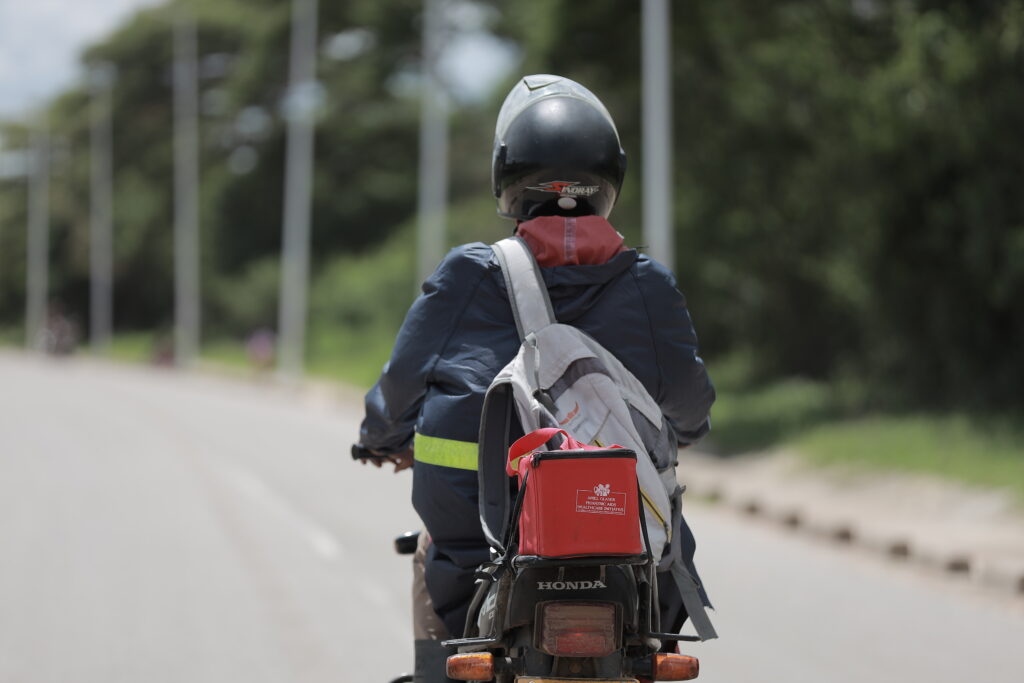
Every morning in Bariadi District, Simiyu region Tanzania, Herman Kasase starts his day with a big goal to help people get the health care they need. He gets on his motorcycle and rides to five health centers, picking up blood samples and taking them to the laboratory.
Reliable transport of medical samples plays a vital role in ensuring timely HIV and TB diagnosis and quick access to life-saving treatment. In many parts of Bariadi District in Tanzania’s Simiyu Region, long distances and limited transport options make it difficult for health facilities in remote areas to send samples to testing laboratories.
Before this project started, people in far away villages had to wait a long time to get test results. Some people couldn’t even get tested at all. But now, thanks to riders like Kasase, things are different.
“I ride through villages, even in those remotely unreached areas,” says Kasase. “I know someone out there is waiting for answers.”
Through this model, he helps close the gap in HIV care by collecting samples from five health facilities and delivering them to Bariadi District Hospital. His work ensures blood samples reach the lab on time and that results are quickly returned to clients helping doctors make faster decisions and improving patient outcomes.
Simple Transport, Big Impact
This work is part of the U.S. funded Afya Thabiti Project, the project found a smart and simple solution: the use of bodaboda riders to carry blood samples from health centers to the lab.
Health workers say this has made a big difference. Now, they can test people faster, get results sooner, and help more people stay healthy.
“We used to wait for a long time 10-14 days,” says a nurse from Lagangabilili Health centre. “Now, we can treat people earlier. It’s helping a lot.”
Kasase rides every day through long distances. He doesn’t wear a white coat, but he plays a very important role in the health system.
“It feels good to know I’m helping,” he says. “Every trip I make means someone might get the care they need faster.”
The job also helps him take care of his own family. As part of the project, Kasase and other riders now have steady work and a strong sense of purpose.
“Before this, things were hard,” Kasase says. “Now I can support my family and help my community too.”
A Health System That Reaches Everyone
Since the project began health centers have seen real improvements. Samples arrive at the lab on time, fewer get spoiled or delayed, and health workers can now give results back to patients more quickly.
This helps more people start treatment earlier, especially for HIV and TB. And it also helps babies born to mothers with HIV get tested and cared for sooner.
“Things are much better now,” says Yohana Shede, a lab worker at Bariadi District Hospital. “Bodaboda riders bring 15 to 25 samples every day. We get test results in about two weeks instead of waiting over a month. This helps people stay in treatment and get healthier.”
Looking Ahead
The success in Bariadi District shows that a small idea like using motorcycles for transport can make a big difference. The U.S funded Afya Thabiti project continues to grow this model and bring it to other areas, so that even more people in remote villages can get the care they need.
“This is more than just transport,” says Dr. Hamis Kulemba, the Regional Coordinator for HIV/AIDS, Sexually Transmitted Infections (STIs), and Hepatitis (RASHCo) in Simiyu Region. “It’s a lifeline for people who used to be left behind.”
With support from the U.S. through PEPFAR–CDC Tanzania, under the Afya Thabiti project implemented by Amref Tanzania in collaboration with the Ministry of Health and local stakeholders, innovations like the bodaboda sample transport model are showing real impact.
Even simple, community driven solutions can play a powerful role in the fight to end AIDS. By bringing services closer to people no matter how remote this model is not only improving care but also strengthening a health system where no one is left behind.

Communications Specialist with 7+ years in public health and development, focused on strategic storytelling and digital engagement.
Read more: https://www.linkedin.com/in/julieth-mongi-48742610b/