Contribution of Buffalo Bicycle in Transforming Community Health Services in Kasulu DC.
In the rural communities of Kasulu District Council, Kigoma Region, delivering essential
health services such as Maternal and Child Health (MCH) and Community-Based Surveillance
(CBS) has long been challenged by distance and limited transport. To address these barriers,
Amref Health Africa in Tanzania, in collaboration with World Bicycle Relief, in June 2025,
through the Global Health Security Project, has strengthened community health systems by
equipping Community Health Workers (CHWs) with tools and capacity to improve service
delivery and disease surveillance at the household level.
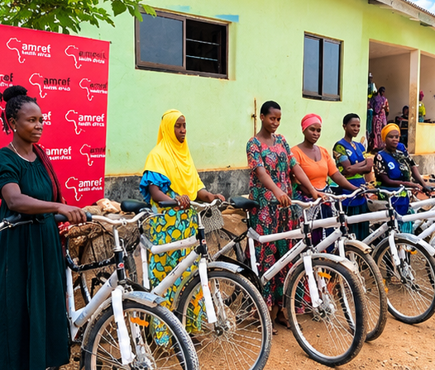
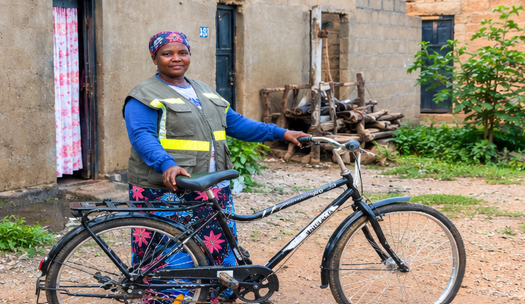
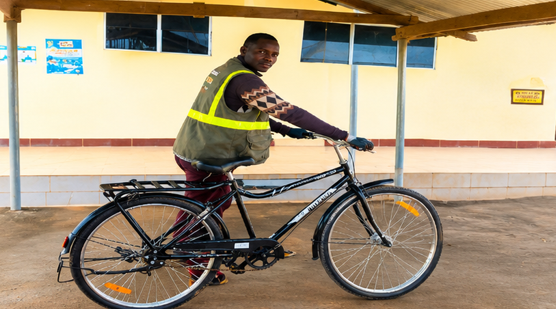
One of the beneficiaries of this initiative is Community Health Worker (CHW) Boaz Pascal
Nguladi, who serves 115 households with a population of 632 people in Nyantete hamlet,
Kabagwe village. Before receiving support, Boaz relied entirely on walking to visit
households scattered across distances of up to 3 kilometers. This consumed significant time
and energy, limiting his ability to consistently reach all beneficiaries and affecting the timely
delivery of services and effective community monitoring.
The introduction of the Buffalo Bicycle through World Bicycle Relief marked a turning point
in Boaz’s work. Provided as a practical solution to transport challenges, the bicycle enabled
him to travel faster, cover longer distances, and reduce fatigue. This simple yet impactful
intervention removed key mobility barriers, significantly improving the efficiency and reach
of community health services in his area.
When Boaz first began his outreach work, reaching families across the community was a
daily struggle. Long distances and exhausting travel meant he could only visit about 20
households in a week. Many families had to wait longer than they should for the care and
support they needed. Everything changed when he received a bicycle. With this simple but
powerful tool, Boaz’s work was transformed almost overnight. He could now move swiftly
from one household to another, cutting down travel time and reaching families when they
needed him most. In just a short period, the number of households he visits each week grew
from 20 to 65.
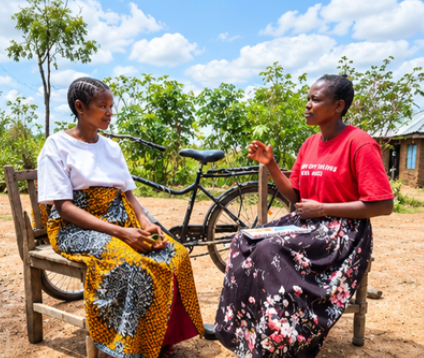
The difference was more than just numbers. With less fatigue weighing him down, Boaz
found renewed energy and purpose in his work. He started visiting families more frequently,
building deeper trust and stronger relationships within the community. People began to rely
on his presence, knowing he would show up consistently and on time.
Smiling as he reflects on the change, Boaz says, “The donated bicycle has been a vital link
connecting me to the people I serve. I feel more motivated to continue with my work.”
What was once a challenge has become a story of connection, resilience, and impact; all
powered by a single bicycle.
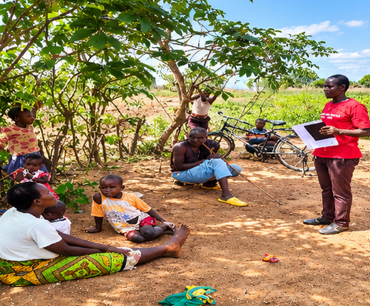
Similar transformations have been experienced by other CHWs in the district. For example,
Sadick Ramadhan Kinono, serving a much larger population of 3,135 people in Kabulanzwili
village, previously struggled with distances of up to 35 kilometers. Before receiving a bicycle,
he could only visit 8 to 10 households per week and often had to use his own resources for
transport. With the Buffalo Bicycle, his outreach has more than doubled to 20 to 35
households per week, reaching pregnant mothers and children with antenatal care and
detecting signals of public health threats.
The detection and reporting of signals of disease outbreak in Kasulu DC have increased from
120 signals from August 2025 January 2026 before the donation of bicycles to 198
from January to May 2026 after donation of the Buffalo Bicycles. This has strengthened
management of public health threats in the district and region at large.
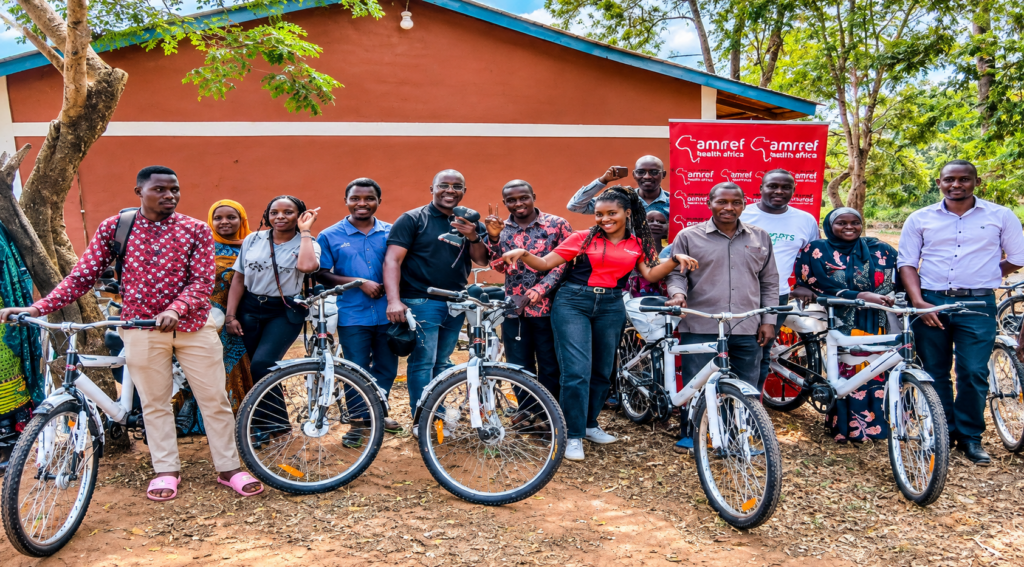
These stories highlight a critical lesson: reliable transport is essential for effective
community health service delivery in rural areas. Bicycles not only improve efficiency and
coverage but also enhance accountability and build community trust through regular and
punctual visits. In conclusion, the Buffalo Bicycle initiative has proven to be a transformative
investment in community health systems in Kasulu DC.
By equipping CHWs with appropriate tools, it empowers them to overcome geographic barriers, extend their reach, and deliver life-saving services more effectively. CHWs express deep gratitude to stakeholders for this support, which has significantly improved their ability to serve and connect with their
communities.

Communications Specialist with 7+ years in public health and development, focused on strategic storytelling and digital engagement.
Read more: https://www.linkedin.com/in/julieth-mongi-48742610b/