Reaching the Unreached: How Mobility Support Helped Malimi Improve Fistula Case Identification in Geita Region.
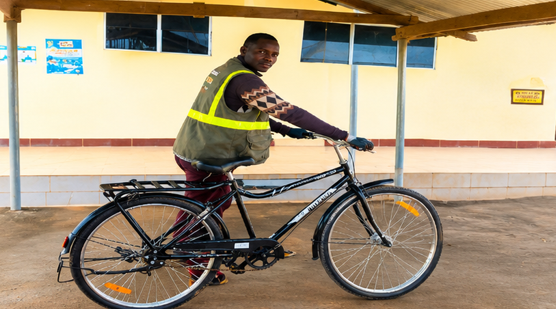
Malimi Mabanga Athuman, a 40-year-old Fistula Ambassador from Izunya village in
Nyang’hwale District, has dedicated nearly a decade to serving his community as a Community
Health Worker. In November 2022, he was selected to support the Fistula Phase II project,
covering a catchment area of more than 13,000 people across Izunya Ward. The ward’s seven
villages are widely scattered, making outreach particularly challenging. Despite these obstacles,
Malimi worked tirelessly to raise awareness about fistula prevention and treatment. On 5th July
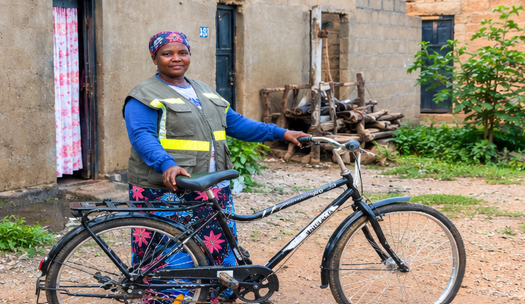
2025, he was supported with a bicycle to enhance his capacity to reach and educate women
who have, or are at risk of developing Obstetric Fistula.
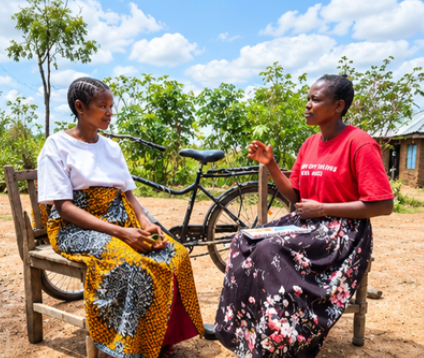
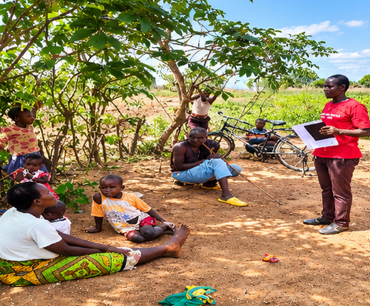
Through door-to-door visits and community meetings, Malimi and fellow Fistula ambassadors reached households, health facilities, and places of worship. Over the course of the project, Malimi personally provided fistula education to: More than 450 families through household visits 15 village meetings, 3 health facilities and Reproductive and Child Health (RCH) clinics and 8 houses of worship.
These efforts helped break the silence surrounding obstetric fistula and encouraged families to
support women in seeking treatment. However, the long distances between villages limited the
number of households Malimi could visit each month.
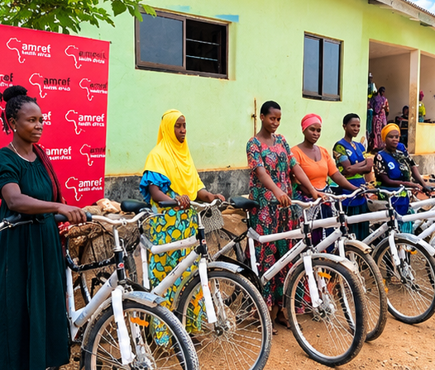
This challenge was overcome when Amref Health Africa, in partnership with World Bicycle
Relief, donated bicycles through the Buffalo Bicycle initiative. For Malimi, the bicycle became a
transformative tool. With improved mobility, he expanded his outreach, reaching remote
communities more frequently. His efforts led to the identification of two women living with
fistula, Lucia Lushinde, 70 years old, who was referred to Bugando Medical Center in September
2025 and she is now recovering well. Felister James, 19 years old was referred on November
2025 and she was treated. Following successful treatment, the women reintegrated into their
communities, resumed daily activities, and began small income-generating projects supported
by the initiative restoring their dignity and confidence.
Reflecting on this change, Malimi shared: “Before receiving the bicycle, it was difficult to reach
distant villages. Previously I was able to visit 10 to 15 households, but now I can reach up to 60 households per month. Moreover, I can travel further and find women who were suffering in
silence. Seeing them receive treatment and return to normal life gives me great motivation to
continue this work.”
Today, Malimi continues to serve as a vital link between the health system and the community.
His bicycle carries more than just him across villages, it carries hope, healing, and the promise
of a better future for women who once believed their condition could not be cured.

Communications Specialist with 7+ years in public health and development, focused on strategic storytelling and digital engagement.
Read more: https://www.linkedin.com/in/julieth-mongi-48742610b/